5G vs. Wi-Fi 6: What’s Faster and Better for Mobile Users?
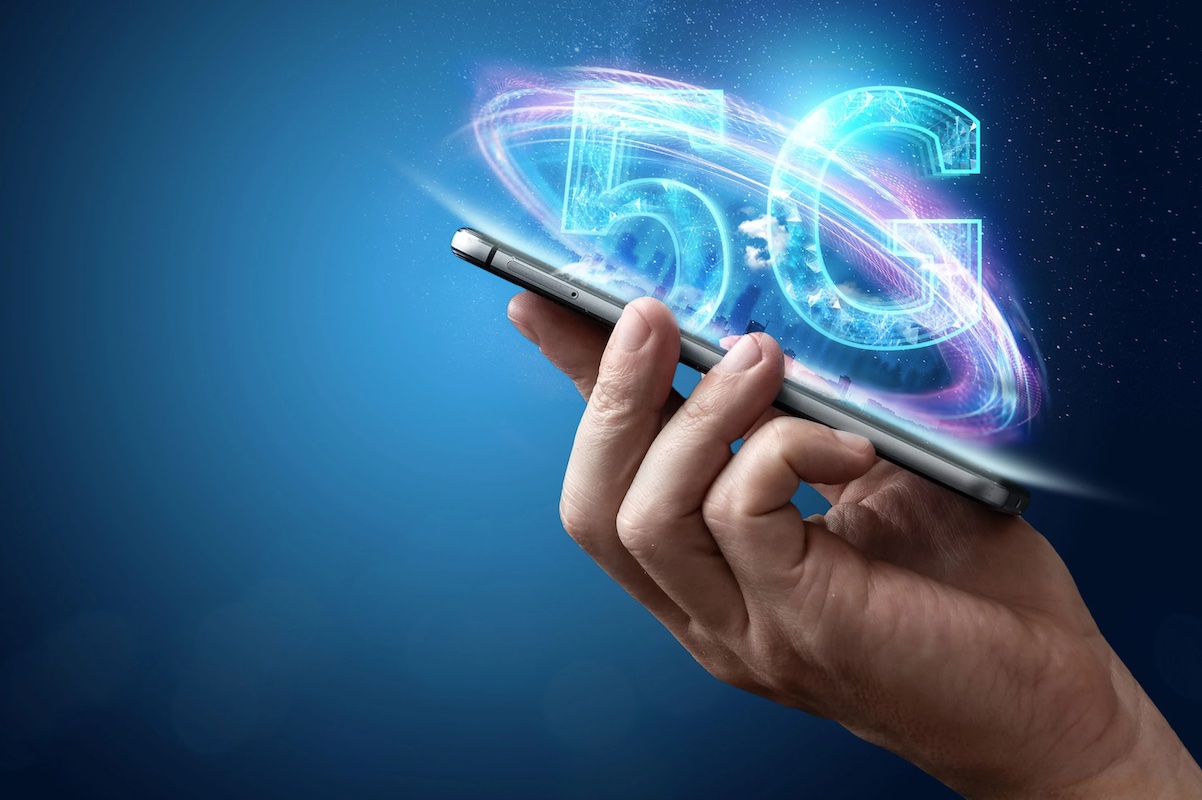
In today’s hyper-connected world, mobile users are constantly chasing the fastest, most reliable internet connections — whether for streaming, gaming, working remotely, or just browsing. Two leading wireless technologies dominate the conversation: 5G and Wi-Fi 6. While both promise high speeds, low latency, and improved user capacity, they serve very different purposes and come with distinct pros and cons.
So which one is better for mobile users? The answer isn’t black and white. In this deep dive, we’ll explore how 5G and Wi-Fi 6 compare in terms of speed, coverage, latency, use cases, and more — so you can make the best choice for your needs.
What is 5G?
5G, short for fifth-generation cellular network, is the latest mobile broadband technology. It succeeds 4G LTE and is designed to offer faster speeds, lower latency, and greater network capacity.
Key Characteristics of 5G:
-
Operates over low-band, mid-band, and high-band (mmWave) spectrum
-
Offers speeds from 100 Mbps to over 2 Gbps in ideal conditions
-
Supports ultra-low latency (<10ms)
-
Available through mobile carriers (e.g., Verizon, T-Mobile, AT&T)
There are different types of 5G:
-
Low-band 5G: Wide coverage, moderate speeds
-
Mid-band 5G (Sub-6 GHz): Good balance of speed and coverage
-
mmWave 5G: Blazing fast, but limited range and penetration
What is Wi-Fi 6?
Wi-Fi 6, also known as 802.11ax, is the next generation of Wi-Fi and the successor to Wi-Fi 5 (802.11ac). It was built to handle more devices and improve performance in high-traffic areas like homes, airports, and stadiums.
Key Characteristics of Wi-Fi 6:
-
Operates on both 2.4 GHz and 5 GHz bands (and 6 GHz with Wi-Fi 6E)
-
Offers speeds up to 9.6 Gbps in optimal conditions
-
Uses technologies like OFDMA and MU-MIMO for efficiency
-
Installed via routers and access points in private or public networks
Speed Comparison: 5G vs. Wi-Fi 6
| Technology | Theoretical Max Speed | Real-World Speed | Notes |
|---|---|---|---|
| 5G (mmWave) | 10 Gbps+ | 1–3 Gbps | Highly dependent on coverage |
| 5G (Sub-6) | 1–3 Gbps | 200–800 Mbps | Widely available, decent speed |
| Wi-Fi 6 | 9.6 Gbps | 300 Mbps – 1 Gbps | Router quality and congestion matter |
Verdict:
Wi-Fi 6 has a higher theoretical ceiling, but 5G mmWave can match or exceed it in ideal outdoor environments. In indoor and home scenarios, Wi-Fi 6 typically offers more consistent speed due to less interference.
Latency: Which Is More Responsive?
Latency is crucial for activities like gaming, video calls, and AR/VR.
-
5G Latency: As low as 1ms on mmWave, usually around 20–40ms on Sub-6
-
Wi-Fi 6 Latency: Averages around 2–10ms, depending on network load
Verdict:
5G mmWave can technically reach lower latency, but Wi-Fi 6 often provides more stable latency indoors, especially when the network is optimized.
Coverage and Availability
-
5G is dependent on cellular tower infrastructure. Coverage varies widely based on your location and carrier.
-
Great outdoors, patchy indoors (especially mmWave)
-
Subject to network congestion
-
-
Wi-Fi 6 is dependent on your router and its proximity. Range is typically:
-
~50 meters indoors
-
~100 meters outdoors (without obstacles)
-
Verdict:
-
5G wins in mobility and wide-area coverage, making it ideal for use on-the-go.
-
Wi-Fi 6 dominates indoors, especially in homes, offices, and cafes.
Device Compatibility
To take advantage of either technology, your smartphone or tablet must support it.
-
Most flagship phones in 2023–2025 (e.g., Galaxy S25, iPhone 16, Pixel 9) support both Wi-Fi 6 and 5G.
-
Budget or mid-range phones may lack mmWave 5G or Wi-Fi 6E.
Tip:
Check for both Wi-Fi 6/6E and Sub-6 + mmWave 5G support when shopping for a new phone if future-proofing matters to you.
Battery Life Impact
-
5G, particularly mmWave, can drain your battery faster due to its high power consumption and constant signal searching.
-
Wi-Fi 6 is generally more power-efficient, especially with features like Target Wake Time (TWT), which reduces idle time.
Verdict:
Wi-Fi 6 is better for battery life, especially when you're stationary and connected for long periods (like streaming or downloading large files).
Security and Privacy
-
Wi-Fi 6 includes WPA3 encryption, offering strong protection on secure networks.
-
5G uses advanced carrier-level encryption and SIM-based authentication.
However, public Wi-Fi hotspots (even Wi-Fi 6-enabled) are more vulnerable to man-in-the-middle attacks unless protected by a VPN.
Verdict:
5G offers better out-of-the-box security for public use, while Wi-Fi 6 is safe on private, secured networks.
Use Case Scenarios: Which One Should You Use?
| Scenario | Best Choice | Reason |
|---|---|---|
| At home | Wi-Fi 6 | Faster, stable, cheaper data |
| On the move (train, city) | 5G | Broad coverage, mobile-ready |
| Gaming (low latency) | Wi-Fi 6 | Consistent response indoors |
| Streaming 4K videos | Either | Both support high bandwidth |
| Remote work/video calls | Wi-Fi 6 | Stable and secure connection |
| Public areas (cafes, malls) | 5G | More secure, less congested |
| Battery conservation | Wi-Fi 6 | Better power efficiency |
Final Verdict: 5G vs. Wi-Fi 6 — Which is Better?
There’s no universal winner — it comes down to your environment, device, and usage needs:
-
Choose Wi-Fi 6 if:
-
You're at home, work, or somewhere with a reliable router
-
You want consistent speeds, lower latency, and battery-friendly performance
-
You have control over the network setup
-
-
Choose 5G if:
-
You're traveling, commuting, or using your phone outdoors often
-
You need mobile internet without relying on local Wi-Fi
-
You want better privacy in public settings
-
The Best Strategy? Use Wi-Fi 6 when stationary and switch to 5G when mobile. Many modern devices seamlessly toggle between the two for optimal performance — and knowing when to use each gives you the best of both worlds.
Stay Connected, Stay Informed — only on Mob-Finder.online
At Mob-Finder.online, we break down the latest in mobile technology so you can stay ahead in this fast-evolving world. Whether it’s choosing your next smartphone or understanding the tech behind your network, we’ve got you covered.
Latest Articles



Latest Updates in Online Courses and Education.
At Mob-Finder.online, we believe that a smartphone review should be more than just a spec sheet recap or a quick...
Read MoreThe mobile technology world is moving faster than ever — and in 2025, we’re seeing breakthroughs that are set to...
Read MoreOnce upon a time, taking professional-looking photos required an expensive DSLR, bulky gear, and a deep understanding of photography. But...
Read MoreWith millions of mobile apps available across iOS and Android, finding the right tools to boost your productivity and bring...
Read MoreFoldable phones have transformed from futuristic concepts to real-world products in just a few years. In 2025, the market is...
Read MoreWhether you’re a power user or just want your phone to make it through the day, battery life is one...
Read MoreWhen it comes to smartphones, one of the biggest choices you'll face is the operating system. In 2025, the two...
Read MoreWhen it comes to smartphones, you don’t need to spend a fortune to get a reliable, high-performing device. As mobile...
Read MoreExploring the Ancient World: Bible History & Archaeology
Uncover the people, places, and events that shaped biblical and ancient history.
Dive into a rich collection of resources on ancient civilizations, biblical archaeology, and historical contexts. From the empires of Babylon and Assyria to the life of Jesus and the early church, discover maps, timelines, commentaries, and scholarly insights that bring the ancient world to life. Explore the intersection of faith, history, and archaeology with our curated articles, maps, and studies.